The Box in Which We Live
University of Iowa Press; November 17, 2026; Winner of the 2026 John Simmons Short Fiction Award
"I alternated laughter and admiration reading the darkly comic, metafictional pieces in Samuel Rafael Barber’s The Box in Which We Live, even as I tried to locate the source of its absurdist charm and off-kilter wisdom. Are these stories Beckettian? Borgesian? Barthelmeic? Am I getting hints of Steven Millhauser, or Robert Coover, or Lydia Davis? Or, someday, might such original linguistic and thematic playfulness be described as Barberian." — Jess Walter, judge, John Simmons Short Fiction Award
“Animated by the postmodern spirit of Roberto Bolaño, David Markson, and Ben Lerner, Barber’s stories try on whatever form they can—lecture notes, a choose-your-own adventure, a dreaded exam—to yank our attention to the horrifying power of our insipid politics. Barber is that rare thing in a debut writer: a fearless and true original.”— Manuel Muñoz, author, The Consequences
“Forged in Kafka’s absurdism, but with the scathing wit of Donald Barthelme, Roberto Bolaño, and Thomas Pynchon, The Box in Which We Live pulls no punches in this celebrity roast of history’s fraudsters, charlatans, and pencil pushers en route to their self-actualization as oligarchs, puppet dictators, hedge-funders, tech overlords, and alt-right messiahs. Maybe no one ever expects a junta, but when it comes to late-stage capitalism, everything is there in the formation, Barber shows us, as he brilliantly rides the knife’s edge of humor within the banality of evil.”— Joanna Howard, author, Porthole
“Here they come: Señora O’Shaughnessy, Professor Barkley-Peters-Bök, Queequeg the cat—and Samuel Rafael Barber, the phenom behind these and other splendid inventions. The Box in Which We Live is a book of brilliant mischief.”— Jason Schwartz, author, John the Posthumous
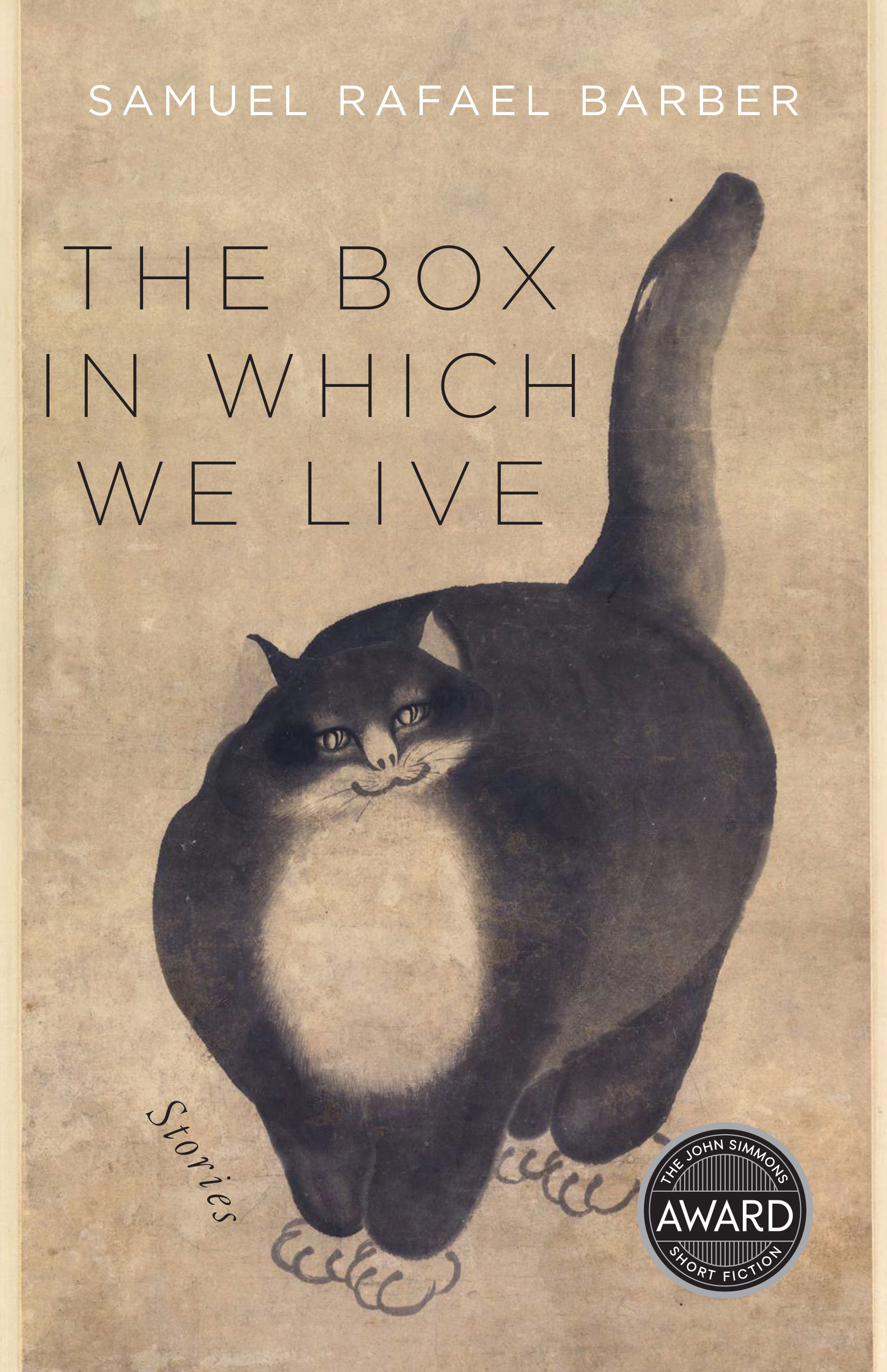
The Box in Which We Live Cover - A Cannibalistic Cat

Thousands of Shredded Scraps of Paper Located across Five Landfills, That if Pieced Together Form a Message
The Cupboard Pamphlet; 2019; contest Editors’ Choice
“Use in the classroom to discuss: segmented narratives; internal structures; furtive performances of the personal; speech acts; codes; trickster figures; paper as material object; first-person narrative strategies; the weight of witness; (state of) being down and out; observation and surveillance; political critique; conspiracy theories; living in late-stage capitalism; automation; relay races; place as repository of memory; place studies; regionalism; literature of the mountainous West; Tuba City; “America”; basements; factories; daiquiris; tubas.” - “Teaching Notes”
Interview with Jon Riccio at Sonora Review
[Interested in a copy? Email me.]